No Result
View All Result
Sunday, December 7, 2025
23 °c
Tripoli
24 ° Sat
24 ° Sun
  • Advertising
  • Contact
LibyaHerald
  • Home
  • Libya
  • Business
  • Opinion
  • Magazine
  • Advertising
  • Login
  • Register
SUBSCRIBE
  • Home
  • Libya
  • Business
  • Opinion
  • Magazine
  • Advertising
  • Login
  • Register
No Result
View All Result
LibyaHerald
No Result
View All Result
Home Libya

Tripoli hospital’s medicine lack, fails cancer kids

bythomwestcott
July 10, 2013
Reading Time: 3 mins read
A A
Tripoli hospital’s medicine lack, fails cancer kids

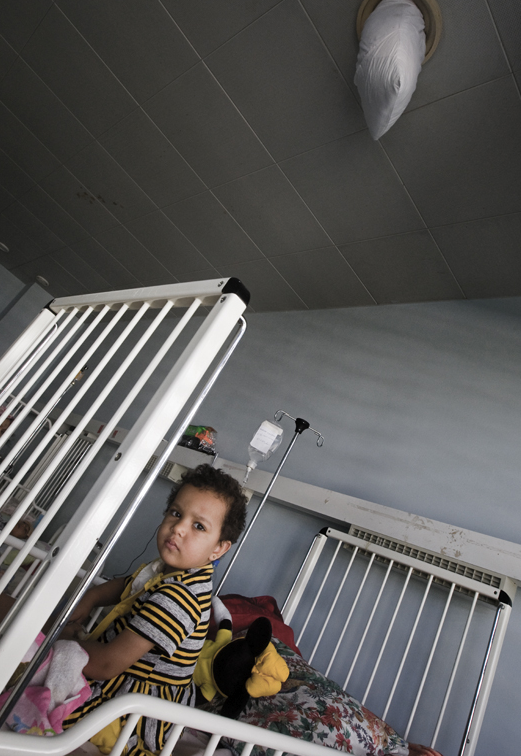
Tripoli Medical Centre lacks medicines needed for the treatment of children suffering from cancer (Photo: Giovanni Diffidenti)

By Umar Khan.

Tripoli Medical Centre lacks medicines needed for the treatment of children suffering . . .[restrict]from cancer (Photo: Giovanni Diffidenti)

Tripoli, 9 July 2013:

Tripoli Medical Centre (TMC), one of the largest hospitals in North Africa, is failing children suffering from cancer, with drastic shortages of essential medication.

According to both parents and medical staff, slow procurement procedures mean that essential daily dosages are often missed. The paediatric oncology ward, which deals with childhood cancers, often lacks medicines, with doctors relying on supplies arranged by non-governmental organisations (NGOs) and social workers.

The paediatric oncology ward itself is in need of urgent attention and presents a grim picture. Outdated equipment, rusty beds and broken furniture are common sights, with the department’s overall appearance further tainted by paint peeling off the walls.

RELATED POSTS

Aldabaiba opens First Phase of Tripoli’s Third Ring Road

23 unidentified corpses discovered in Abusleem Hospital mortuary fridges

Decor and furnishings are the last thing that parents will complain about, however, as their main concern is making sure their children are receiving the proper treatment.

One parent, identified only as Um Maryam, complained about the hospital’s lack of support. She travels all the way from Ghariyan to visit her daughter. “I borrow money for each visit to Tripoli and sometimes we are told to buy medicines from outside,” she said, adding that she could not afford to buy these. Sometimes, she said, hospital staff tried to help by sourcing medication from elsewhere.

There are not many NGOs currently working in the medical sector in Libya, and help from civil societies is also very limited. TMC management, however, should not need any help from civil societies to procure medicines, because of its allotted budget from the Ministry of Health.

Sluggish procurement systems and a lack of coordination between the hospital management and health ministry officials seem to be the root of the problem. An official from the Ministry of Health, Mohummed Khubali, confirmed that there was a problem with supplies of medicines. “These shortages result from a lack of coordination and we try to minimize it as much as possible,” he said. Khubali, however, refused to give any further details.

Another Ministry official, Nooreddin Muhummed, said that the hospitals themselves are responsible for such shortages. “It depends on the supply report from hospitals,” he said, “some are very professional and active and don’t face any problems, while others are slow. Patients suffer because of them.”

TMC management has declined to comment on the issue, only saying: “everything is in order. The hospital is operating normally.” Doctors working at TMC who have complained about the shortages asked to remain anonymous, fearing a backlash from health sector officials.

One young activist, Omaima Rojbani, has taken up the cause and is working independently to try and help cancer-stricken kids. She started visiting TMC’s children’s oncology ward in 2010 with some friends, taking presents of gifts and balloons.

“We took some gifts for the children for the first time in 2010 and then we started visiting them regularly,” she said. “We were shocked to see the terrible conditions, and we painted the ward in different colors, so they would feel happier.”

“One day a doctor told us that there is such a shortage of medicines, that sometimes it is too late to give these to the patients,” Rojbani told the Libya Herald. “He said that children could do without gifts but not medicines, and told us it would be better if we brought medicines instead.”

She said the doctors gave her the names of the medication needed and, for over a year, her and her friends have been raising money to buy medicines for the children.

She raises money through an extended circle of friends and family. “I just tell them how the parents of those children are feeling and that we should do whatever we can to help them. You don’t need a big system or organisations to do something good, anyone can do it if they really want to.”

Despite several attempts to reach the head of department for all hospitals in Libya, Muhammed al Obeidi, he has not been available to comment.

[/restrict]

Tags: cancerchildren's cancerfeaturedhospitalhospitalskidsLibyamedicinesministry of healthTripoliTripoli Medical Centre

Related Posts

CBL Governor Issa announces three strategic initiatives to build a stronger banking sector at 6th Banking Sector Development Forum in Tunis 7 to 9 December
Business

CBL Governor Issa announces three strategic initiatives to build a stronger banking sector at 6th Banking Sector Development Forum in Tunis 7 to 9 December

December 7, 2025
CBL receives results from meetings with international banks
Business

Latest CBL stats to November 2025 show significant growth in Libya’s electronic banking sector

December 6, 2025
Nine deaths and 16 injured in Tajura state-recognised militia clashes
Libya

Overnight Zawia clashes end with civilian injuries and unconfirmed deaths

December 5, 2025
Interior Ministry’s Diplomatic Missions Protection personnel receiving training in Ukraine
Libya

Three million illegal immigrants in Libya, 75 % of whom are families, constitute ”settlement” which Libyans reject – illegally transfer US$ 7 billion annually: Interior Minister Trabelsi

December 4, 2025
EU to end Operation Sophia and to launch new Mediterranean operation to monitor UN Libya arms embargo
Libya

EU concludes Rome consultations with Libyan institutions on new migration and border management programme

December 4, 2025
Interior Ministry’s Diplomatic Missions Protection personnel receiving training in Ukraine
Libya

Libya’s National Programme for the Deportation of Illegal Immigrants: thousands repatriated with aim to repatriate 60,000 per month

December 3, 2025
Next Post
THE BLESSED MONTH OF RAMADAN

THE BLESSED MONTH OF RAMADAN

There should be no power cuts during Ramadan - Muhairig

libyaherald-Ads

Top Stories

  • Former Tripoli Marriot hotel rebranded, upgraded and reopened as Al-Hayat Tower

    Former Tripoli Marriot hotel rebranded, upgraded and reopened as Al-Hayat Tower

    0 shares
    Share 0 Tweet 0
  • AmCham Libya organizing Second AmCham Pavilion at Tripoli’s 2026 Libya Energy & Economic Summit (LEES)

    0 shares
    Share 0 Tweet 0
  • Libyan Ministry of Oil and Gas and Algeria’s Sonatrach discuss enhancing cooperation in the sector

    0 shares
    Share 0 Tweet 0
  • Three million illegal immigrants in Libya, 75 % of whom are families, constitute ”settlement” which Libyans reject – illegally transfer US$ 7 billion annually: Interior Minister Trabelsi

    0 shares
    Share 0 Tweet 0
  • National Oil Corporation, Eni, BP, and Libyan Investment Authority consortium preparing to drill first deepwater exploratory well in Sirte Basin

    0 shares
    Share 0 Tweet 0
ADVERTISEMENT
LibyaHerald

The Libya Herald first appeared on 17 February 2012 – the first anniversary of the Libyan Revolution. Since then, it has become a favourite go-to source on news about Libya, for many in Libya and around the world, regularly attracting millions of hits.

Recent News

Akakus Oil Operations complete drilling and commissioning of injection well which contributes to restarting several shut down wells

Lack of control of state spending and the de facto existence of two governments in Libya negatively affects the CBL’s effectiveness: CBL Board Member

Sitemap

  • Why subscribe?
  • Terms & Conditions
  • FAQs
  • Copyright & Intellectual Property Rights
  • Subscribe now

Newsletters

    Be the first to know latest important news & events directly to your inbox.

    Sending ...

    By signing up, I agree to our TOS and Privacy Policy.

    © 2022 LibyaHerald - Powered by Sparx Solutions.

    Welcome Back!

    Login to your account below

    Forgotten Password? Sign Up

    Create New Account!

    Fill the forms below to register

    *By registering into our website, you agree to the Terms & Conditions and Privacy Policy.
    All fields are required. Log In

    Retrieve your password

    Please enter your username or email address to reset your password.

    Log In
    No Result
    View All Result
    • Login
    • Sign Up
    • Libya
    • Business
    • Advertising
    • About us
    • BusinessEye Magazine
    • Letters
    • Features
    • Why subscribe?
    • FAQs
    • Contact

    © 2022 LibyaHerald - Powered by Sparx Solutions.

    This website uses cookies. By continuing to use this website you are giving consent to cookies being used. Visit our Privacy and Cookie Policy.