No Result
View All Result
Sunday, December 7, 2025
23 °c
Tripoli
24 ° Sat
24 ° Sun
  • Advertising
  • Contact
LibyaHerald
  • Home
  • Libya
  • Business
  • Opinion
  • Magazine
  • Advertising
  • Login
  • Register
SUBSCRIBE
  • Home
  • Libya
  • Business
  • Opinion
  • Magazine
  • Advertising
  • Login
  • Register
No Result
View All Result
LibyaHerald
No Result
View All Result
Home Business

Strikes risk permanently damaging Libya’s oil and gas reserves warns Eni chief

byMichel Cousins
March 25, 2014
Reading Time: 3 mins read
A A
Strikes risk permanently damaging Libya’s oil and gas reserves warns Eni chief

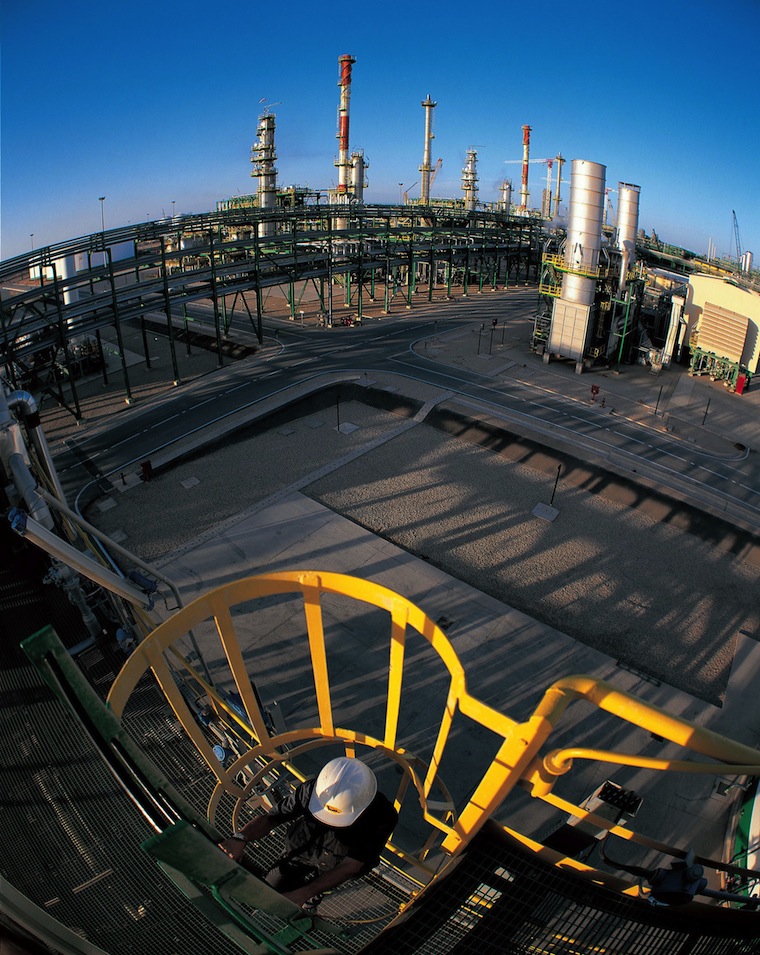
Mellitah plant (Photo: Eni)

By Michel Cousins.

Mellitah plant (Photo: Eni)

Tripoli, 24 March 2014:

Strikers who have been forcing production at Libya’s oil and gas fields . . .[restrict]to stop, restart and stop again risk permanently damaging extraction, the head of the biggest foreign energy company in the country has said.

Such action could damage the geology of the fields, ENI’s Chief Executive Officer Paolo Scaroni told the Libya Herald.

On a flying visit to Tripoli to meet with the interim Prime Minister, Abdullah Al-Thinni, he said that he and others in the oil industry were extremely worried about what had been happening.

RELATED POSTS

National Oil Corporation, Eni, BP, and Libyan Investment Authority consortium preparing to drill first deepwater exploratory well in Sirte Basin

Eni and BP resume operations in Libya, Repsol and OMV to start within weeks: NOC

Production in the Wafa, El Fil and Sharara fields in the south west of the country have been disrupted on several occasions either by local strikers’ blockades or elsewhere by activists with other agendas turning pipeline valves down or off.

Every time there was a protest for whatever reason, Scaroni said, whether over salaries or local tribes feeling excluded, it had increasingly translated into “let’s stop production of oil and gas”.

 “Opening and closing gas and oil fields is not like switching a light on and off. It risks damaging the geology of the field,” he stated. Oil and gas needed natural pressure to bring them to the surface. That could be damaged by constantly stopping and starting production. It was “putting at risk at risk future generations”, he said.

All Libya’s money comes from oil, he pointed out, and the off-on-off intervention threatened it. If the pressure was affected it would be much more costly to produce oil and gas.  Libya would suffer.

Those responsible were “shooting themselves in the foot – and their children in the foot,”   he said.

In any event, the need for security was paramount, he said, if the country’s oil and gas industry was to flourish and grow.

There had been plans for a new round of concession bids before the revolution, and Scaroni hoped it would happen relatively soon.  But “security is a precondition for a new round,” he stressed.  International oil companies would not invest hundreds of millions of dollars without security, when there was kidnapping and shooting. “In order to attract [foreign] companies you need public order.”

As far as it was concerned, Eni felt “relatively secure” at the moment, he said, but it was far from happy about the general situation.

As to its joint venture Mellitah operations with the National Oil Corporation, Eni was performing relatively well, Scaroni explained. The Wafa oilfield strike was over and gas was flowing for Libya’s domestic needs and through the 520-kilometre undersea Greenstream pipeline to Italy – 11 million cubic metres a day for the Libyan market, and 21 millon a day for export.

Mellitah could produce 300,000 barrels of oil a day equivalent, “if things went well”, he said. As it was, it was producing around 250,000 b/d – which meant that given the shutdown in the east because of the oil terminal blockades, it would producing most of Libya’s oil. It also produced all Libya’s gas, he pointed out.

The reason Eni was performing well, he said, was down to the fact that operations were mostly in the west of the country –unaffected by the terminal blockades – and that “we have lots of gas and we have by far the strongest [international] presence in Libya with 3,000 employees”. A further reason was that it had good relations with the people and tribes were it operated.

In relation to that, Eni was committed to investing in social development programmes, notably health, housing and water supply, to help those living where it was working, Scaroni said. “We want people in areas where we operate to feel the benefit of our presence.” It was a strategic objective everywhere Eni was in Africa, he stressed.

Social funding would see investment worth “hundreds of millions of dollars” in Libya and there were plans for an MOU on the subject. But nothing would be decided by Eni alone. It would be up to the government and the NOC to designate the projects.  

But again, it came back to security.  The programme would go ahead “as long as we can produce”.

It was an apposite statement in the circumstances. The strike at Wafa was over but the same day that Scaroni was in Tripoli, strikers at the massive El Fil field west of Murzuk again stopped production – increasing the risk to its geology. [/restrict]
Tags: EnifeaturedLibyaoil & gasPaulo Scaroni

Related Posts

CBL Governor Issa announces three strategic initiatives to build a stronger banking sector at 6th Banking Sector Development Forum in Tunis 7 to 9 December
Business

Lack of control of state spending and the de facto existence of two governments in Libya negatively affects the CBL’s effectiveness: CBL Board Member

December 7, 2025
LBC leading delegation to Miami for America’s Food and Beverage Show – 18 to 20 September
Business

Libyan Business Council and Islamic Development Bank hold virtual meeting on supporting and financing the private sector

December 7, 2025
CBL Governor Issa announces three strategic initiatives to build a stronger banking sector at 6th Banking Sector Development Forum in Tunis 7 to 9 December
Business

CBL Governor Issa announces three strategic initiatives to build a stronger banking sector at 6th Banking Sector Development Forum in Tunis 7 to 9 December

December 7, 2025
CBL receives results from meetings with international banks
Business

CBL instructs banks, fuel distribution companies and the bakeries’ union to increase the use of e-payments

December 7, 2025
NOC announces force majeure at Zawia port
Business

Zueitina Oil and Gas Co. launches Second Injection Unit – increasing production by 8,000 barrels per day

December 6, 2025
CBL receives results from meetings with international banks
Business

Latest CBL stats to November 2025 show significant growth in Libya’s electronic banking sector

December 6, 2025
Next Post

Bronze and silver for Libya in judo competition

Al-Thinni likely to be given another fortnight as PM by Congress

libyaherald-Ads

Top Stories

  • Former Tripoli Marriot hotel rebranded, upgraded and reopened as Al-Hayat Tower

    Former Tripoli Marriot hotel rebranded, upgraded and reopened as Al-Hayat Tower

    0 shares
    Share 0 Tweet 0
  • AmCham Libya organizing Second AmCham Pavilion at Tripoli’s 2026 Libya Energy & Economic Summit (LEES)

    0 shares
    Share 0 Tweet 0
  • Libyan Ministry of Oil and Gas and Algeria’s Sonatrach discuss enhancing cooperation in the sector

    0 shares
    Share 0 Tweet 0
  • Three million illegal immigrants in Libya, 75 % of whom are families, constitute ”settlement” which Libyans reject – illegally transfer US$ 7 billion annually: Interior Minister Trabelsi

    0 shares
    Share 0 Tweet 0
  • National Oil Corporation, Eni, BP, and Libyan Investment Authority consortium preparing to drill first deepwater exploratory well in Sirte Basin

    0 shares
    Share 0 Tweet 0
ADVERTISEMENT
LibyaHerald

The Libya Herald first appeared on 17 February 2012 – the first anniversary of the Libyan Revolution. Since then, it has become a favourite go-to source on news about Libya, for many in Libya and around the world, regularly attracting millions of hits.

Recent News

Lack of control of state spending and the de facto existence of two governments in Libya negatively affects the CBL’s effectiveness: CBL Board Member

Libyan Business Council and Islamic Development Bank hold virtual meeting on supporting and financing the private sector

Sitemap

  • Why subscribe?
  • Terms & Conditions
  • FAQs
  • Copyright & Intellectual Property Rights
  • Subscribe now

Newsletters

    Be the first to know latest important news & events directly to your inbox.

    Sending ...

    By signing up, I agree to our TOS and Privacy Policy.

    © 2022 LibyaHerald - Powered by Sparx Solutions.

    Welcome Back!

    Login to your account below

    Forgotten Password? Sign Up

    Create New Account!

    Fill the forms below to register

    *By registering into our website, you agree to the Terms & Conditions and Privacy Policy.
    All fields are required. Log In

    Retrieve your password

    Please enter your username or email address to reset your password.

    Log In
    No Result
    View All Result
    • Login
    • Sign Up
    • Libya
    • Business
    • Advertising
    • About us
    • BusinessEye Magazine
    • Letters
    • Features
    • Why subscribe?
    • FAQs
    • Contact

    © 2022 LibyaHerald - Powered by Sparx Solutions.

    This website uses cookies. By continuing to use this website you are giving consent to cookies being used. Visit our Privacy and Cookie Policy.