No Result
View All Result
Wednesday, May 6, 2026
23 °c
Tripoli
24 ° Sat
24 ° Sun
  • Advertising
  • Contact
LibyaHerald
  • Home
  • Libya
  • Business
  • Opinion
  • Magazine
  • Advertising
  • Login
  • Register
SUBSCRIBE
  • Home
  • Libya
  • Business
  • Opinion
  • Magazine
  • Advertising
  • Login
  • Register
No Result
View All Result
LibyaHerald
No Result
View All Result
Home Business

Bangladesh bans manpower export to Libya

byMichel Cousins
May 30, 2012
Reading Time: 2 mins read
A A

By Rahman Jahangir

Dhaka, May 30:

Bangladesh has banned the export of manpower to Libya until a Bangladeshi ambassador is appointed and, according . . .[restrict]to Bangladeshi officials, “a stable government” takes over in Libya.

Khandakar Mosharraf Hossain

Bangladesh’s Labour and Expatriates’ Welfare and Overseas Employment Minister Khandakar Mosharraf Hossain confirmed this to reporters at his office in Dhaka.

“There have been some problems in sending workers to Libya since currently there is no Bangladeshi ambassador there. There will be no problem once an ambassador is appointed there. The foreign ministry has been requested in this regard and they’ve already started the process,” he said.

RELATED POSTS

Newly installed Automated Weather Station in Shahat – part of growing network of Automated Weather Stations across eastern Libya

Arabian Gulf Oil Company Chairman holds virtual meeting with BP

However, the decision to suspend sending workers to Libya appears more connected to visa issues.

It follows the refusal to allow some 200 Bangladeshis to enter the country last week on the basis that their group work visas were fake.  However, both the government and the state-run Bureau of Manpower, Employment and Training (BMET) in Dhaka have rejected the allegation.

“There could be over 190 job seekers deported. But I don’t see any reason behind it  because their visas were issued by the Libyan embassy in Dhaka. We have even re-checked them,” said Begum Shamsunnahar, director general of BMET.

Contacted on Wednesday, she said: “When recruiting agencies submitted their passports with visas seeking emigration clearance from us, we sent a list of those visas to the Libyan embassy for cross-checking. As the embassy OK-ed it, we issued clearance,” she said.

“Permission was given to send workers to Libya provided they got clearance from the [Libyan] embassy,” concurred the minister.  How can these visas be called ‘forged’ if there wasn’t any problem at embassy level?” he asked.

The First Secretary (labour) of the Bangladesh embassy in Tripoli, Ahsan Kibria Siddiqui, said the Libyan authorities had claimed the visas were forged by syndicates outside the Libyan embassy in Dhaka.

Ahsan said he held meetings with officials of the Libya’s Supreme Security Committee and requested them to verify authenticity of the visas but the SSC had insisted that their findings were correct. Ahsan said that they claimed that syndicates both in Bangladesh and Libya were involved in forging visas.

He added that the Libyan immigration authorities has held 76 Bangladeshi workers at Benghazi airport on April 24 on suspicion that they were carrying fake visas, but a day later had handed them over to their employers.

Some 500 Bangladeshi contracted to work in Libya are now awaiting emigration clearance before flying to the country. However, until the issue is resolved, the BMET will no longer issuing clearance.

The problem appears identical to that faced by Egyptian workers in group visas who have been refused entry in recent days.  It was also claimed that their visas were forged. Last week, in two separate incidents, a total of 280 Egyptians travelling on group visas supposedly issued by the Libyan embassy in Cairo were refused entry .

The Egyptian authorities have likewise now decided that anyone travelling on a group visa will not be allowed to fly to Libya. They too are trying to sort out the problem with the Libyan embassy.

Prior to last year’s revolution in Libya, there were an estimated 40,000 Bangladeshis working in the country. The vast majority were forced to leave.

Numbers have started returning.  About 2,500 have done so since the end of the conflict.  Bangladeshi street cleaners are an increasingly common sight in Tripoli. [/restrict]

Related Posts

AGOCO reactivates stalled old Nafoura well to produce 1,200 bpd
Business

Arabian Gulf Oil Company Chairman holds virtual meeting with BP

May 6, 2026
Indian embassy reopens in Tripoli
Business

Libyan Ministry of Health officials travel to India for training

May 6, 2026
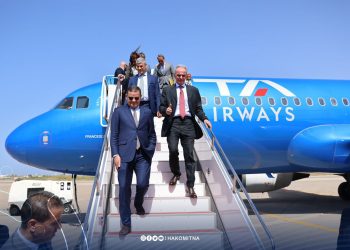
Italian Airlines ITA test flight arrives from Rome at Tripoli’s Mitiga airport with PM Aldabaiba onboard
Business

ITA Airways to resume flights to Tripoli on 3 September

May 6, 2026
Italians hungry for Libyan business “but not at the cost of their lives”
Business

Aldabaiba visits Rome today: Debts to Italy and Libyan bureaucracy are holding back increased trade

May 6, 2026
CBL receives results from meetings with international banks
Business

CBL to inject US$ 300 million into card system, authorises transfer for small traders of up to US$ 100,000 quarterly

May 5, 2026
NOC announces force majeure at Zawia port
Business

NOC wins court case filed by Itrak in the state of Curaçao

May 5, 2026
Next Post

Thais propose oil barter deal

Constitutional legality of Law 37 to be debated in open court

Top Stories

  • Boeing signs a strategic agreement with Libya to modernize its civil aviation

    Boeing signs a strategic agreement with Libya to modernize its civil aviation

    0 shares
    Share 0 Tweet 0
  • Air France flights over Libya causing concern to crew union – other airliners have been overflying since 2025

    0 shares
    Share 0 Tweet 0
  • CBL loosens foreign currency controls – including permitting cash dollar deposits and transfer

    0 shares
    Share 0 Tweet 0
  • Arabian Gulf Oil Company Chairman holds virtual meeting with BP

    0 shares
    Share 0 Tweet 0
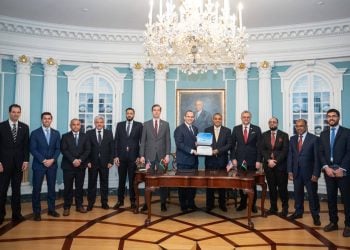
  • Libyan government delegation meets – US Department of Energy – discusses developing oil and gas sector and strategic energy projects

    0 shares
    Share 0 Tweet 0
ADVERTISEMENT
LibyaHerald

The Libya Herald first appeared on 17 February 2012 – the first anniversary of the Libyan Revolution. Since then, it has become a favourite go-to source on news about Libya, for many in Libya and around the world, regularly attracting millions of hits.

Recent News

Newly installed Automated Weather Station in Shahat – part of growing network of Automated Weather Stations across eastern Libya

Arabian Gulf Oil Company Chairman holds virtual meeting with BP

Sitemap

  • Why subscribe?
  • Terms & Conditions
  • FAQs
  • Copyright & Intellectual Property Rights
  • Subscribe now

Newsletters

    Be the first to know latest important news & events directly to your inbox.

    Sending ...

    By signing up, I agree to our TOS and Privacy Policy.

    © 2022 LibyaHerald - Powered by Sparx Solutions.

    Welcome Back!

    Login to your account below

    Forgotten Password? Sign Up

    Create New Account!

    Fill the forms below to register

    *By registering into our website, you agree to the Terms & Conditions and Privacy Policy.
    All fields are required. Log In

    Retrieve your password

    Please enter your username or email address to reset your password.

    Log In
    No Result
    View All Result
    • Login
    • Sign Up
    • Libya
    • Business
    • Advertising
    • About us
    • BusinessEye Magazine
    • Letters
    • Features
    • Why subscribe?
    • FAQs
    • Contact

    © 2022 LibyaHerald - Powered by Sparx Solutions.

    This website uses cookies. By continuing to use this website you are giving consent to cookies being used. Visit our Privacy and Cookie Policy.