No Result
View All Result
Wednesday, April 22, 2026
23 °c
Tripoli
24 ° Sat
24 ° Sun
  • Advertising
  • Contact
LibyaHerald
  • Home
  • Libya
  • Business
  • Opinion
  • Magazine
  • Advertising
  • Login
  • Register
SUBSCRIBE
  • Home
  • Libya
  • Business
  • Opinion
  • Magazine
  • Advertising
  • Login
  • Register
No Result
View All Result
LibyaHerald
No Result
View All Result
Home Libya

Why do Africans migrate? A report

bySami Zaptia
October 23, 2017
Reading Time: 2 mins read
A A
Why do Africans migrate? A report

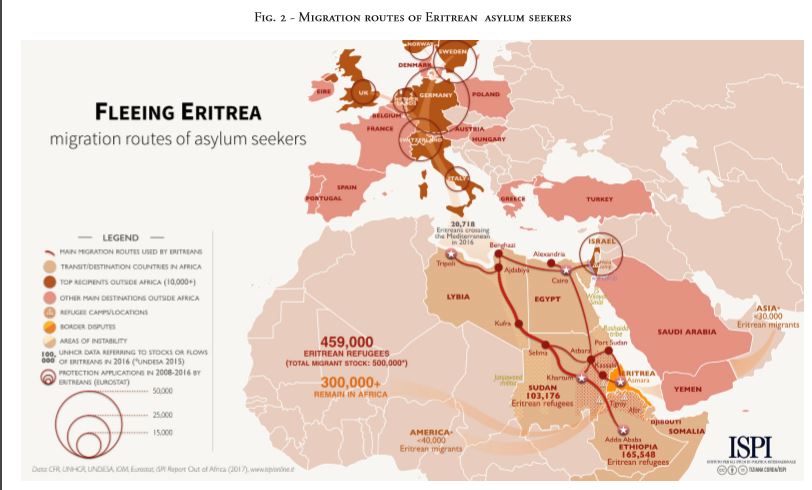
(ISPI).

By Sami Zaptia.

(ISPI).
(ISPI).

London, 23 October 2017:

A report entitled ‘‘Out of Africa. Why people migrate’’ by ISPI, the Italian Institute for International Political Studies, says that European representation of African migration by media and politicians is ‘‘politicized’’ and ‘‘alarmist’’. This has led to ‘‘increasingly more restrictive migration policies’’.

The 170-page report published last week says that the EU and its member states have failed to look below the surface of migration flows as they have repeatedly preferred to turn a blind eye to their root causes.

Contrary to popular perceptions, the report suggests that the size and destinations of African migration are similar to global migratory patterns and that African migrants are more likely to move to neighbouring countries within their African sub-region than elsewhere, because of the higher costs of moving over longer distances. The study concludes that in fact there is a larger than popularly perceived number of sub-Saharan countries each hosting over two million displaced people last year.

RELATED POSTS

Drone attacks on Anti-Security Threats Agency after seizure of boats designated for illegal migration and death of criminal militia leader ‘‘Al-Amu’’ during its security counter-operation

Three million illegal immigrants in Libya, 75 % of whom are families, constitute ”settlement” which Libyans reject – illegally transfer US$ 7 billion annually: Interior Minister Trabelsi

The report says African migration is in fact a complex and multi-faceted phenomenon and easy, convenient explanations distort the truth. By continuously placing the spotlight on border protection and on how European societies are affected by migration flows, they ultimately produce unintended effects.

The study reports that restrictive European migration policies have caused migrants to diversify their destination countries and to resort to riskier routes and irregular practices. These policies also have a negative impact on migrants’ decision to return to their home countries: even if they want to, migrants are less likely to leave Europe if they know it will be difficult to eventually come back, the report says.

And contrary to popular perception, the report concludes that a higher level of African development – rather than poverty – as well as the spread of technnology and mobility, are strong drivers of African migration.

The report says that migration should not be seen purely as a response to external conditions such as global inequalities otherwise many more African migrants would be on the move over long distances.

Indeed the report reveals that migration from Africa, in proportion to the total African population, has actually slightly decreased since the 1990s and that, especially with regards to sub-Saharan migration, it has mostly been directed towards other African countries.

Equally, the oft quoted climate change is presented in the report as a threat multiplier and a supplementary stress factor compounding already difficult realities such as weak governance, limited infrastructure and political instability – rather than as the root cause.

The report questions the claim that most sub-Saharan African migrants move out of Africa to chase better socio-economic opportunities – as most migrants remain in Africa.

In concluding, the report says that African migration will not be disappearing any time soon. It says that restrictive migration policies aimed at better patrolling the EU’s external borders have not solved the issue of migration from Africa, instead generating unintended consequences.

Tags: Africafeaturedillegal migrationISPIsub-Saharan

Related Posts

Former Maltese Ambassador to Libya Charles Saliba is back as Economic Attaché and Economic Envoy for Malta Enterprise
Business

Former Maltese Ambassador to Libya Charles Saliba is back as Economic Attaché and Economic Envoy for Malta Enterprise

April 21, 2026
Expected Resumption of Commercial Activity of Libyan Merchants in Tunisia, while Two Tunisians Were Injured by a Nalut Local
Libya

Libya’s Ras Jedir crossing is a strategic crossing into the depth of African markets: Tunisia’s Chargé d’affaires

April 18, 2026
PM Aldabaiba appoints Mohamed Ben Ghalboun as his new Minister of State for Cabinet and Prime Ministerial Affairs to replace the infirmed Adel Juma
Libya

PM Aldabaiba appoints Mohamed Ben Ghalboun as his new Minister of State for Cabinet and Prime Ministerial Affairs to replace the infirmed Adel Juma

April 18, 2026
Attorney General orders arrests at Jumhouria bank branch for embezzlement
Libya

Former Director of NOC International Marketing Department sentenced to 10 years imprisonment and fined US$ 1.8 billion for fraud

April 14, 2026
CBL receives results from meetings with international banks
Libya

Breakthrough expected in LD-dollar FX market: Central Bank launches comprehensive cash sales plan and distributes US$ 1 billion to banks

April 14, 2026
Ahead of the questioning session, Aldabaiba says parliament has been a failure
Libya

Tripoli Prime Minister Aldabaiba welcomes the signing of the Unified Public Spending Agreement

April 13, 2026
Next Post

Algeria's Tuaregs calls for reopening of Ghat border crossing

LD 5 billion duplicate state-salaries saved since 2015

Top Stories

  • CBL receives results from meetings with international banks

    Governors of Central Bank of Libya and People’s Bank of China agree to launch direct banking transactions

    0 shares
    Share 0 Tweet 0
  • South Korea to dispatch special envoy to Libya to seek alternative oil sources to blockaded Gulf supplies

    0 shares
    Share 0 Tweet 0
  • De La Rue meets Governor of Central Bank of Libya in DC to follow up on its currency printing plan

    0 shares
    Share 0 Tweet 0
  • Libya’s Ministry of Oil and Gas Nigeria-Niger-Libya Gas Pipeline Project Committee holds technical and coordination meeting

    0 shares
    Share 0 Tweet 0
  • Libya’s agricultural sector is moving from planning to execution: Ahmed Ghazali at the Paris Libya-France Business Forum 2026

    0 shares
    Share 0 Tweet 0
ADVERTISEMENT
LibyaHerald

The Libya Herald first appeared on 17 February 2012 – the first anniversary of the Libyan Revolution. Since then, it has become a favourite go-to source on news about Libya, for many in Libya and around the world, regularly attracting millions of hits.

Recent News

Chairman of General Authority for Communications and Informatics urges swift transition from Internet Protocol Version 4 to IPv6

First direct flight from Tripoli lands in Madrid after a hiatus of more than a decade

Sitemap

  • Why subscribe?
  • Terms & Conditions
  • FAQs
  • Copyright & Intellectual Property Rights
  • Subscribe now

Newsletters

    Be the first to know latest important news & events directly to your inbox.

    Sending ...

    By signing up, I agree to our TOS and Privacy Policy.

    © 2022 LibyaHerald - Powered by Sparx Solutions.

    Welcome Back!

    Login to your account below

    Forgotten Password? Sign Up

    Create New Account!

    Fill the forms below to register

    *By registering into our website, you agree to the Terms & Conditions and Privacy Policy.
    All fields are required. Log In

    Retrieve your password

    Please enter your username or email address to reset your password.

    Log In
    No Result
    View All Result
    • Login
    • Sign Up
    • Libya
    • Business
    • Advertising
    • About us
    • BusinessEye Magazine
    • Letters
    • Features
    • Why subscribe?
    • FAQs
    • Contact

    © 2022 LibyaHerald - Powered by Sparx Solutions.

    This website uses cookies. By continuing to use this website you are giving consent to cookies being used. Visit our Privacy and Cookie Policy.