No Result
View All Result
Thursday, January 22, 2026
23 °c
Tripoli
24 ° Sat
24 ° Sun
  • Advertising
  • Contact
LibyaHerald
  • Home
  • Libya
  • Business
  • Opinion
  • Magazine
  • Advertising
  • Login
  • Register
SUBSCRIBE
  • Home
  • Libya
  • Business
  • Opinion
  • Magazine
  • Advertising
  • Login
  • Register
No Result
View All Result
LibyaHerald
No Result
View All Result
Home Business

Imports at ports not paid for by LCs will no longer be released after 31 December

bySami Zaptia
November 18, 2020
Reading Time: 3 mins read
A A

By Sami Zaptia.

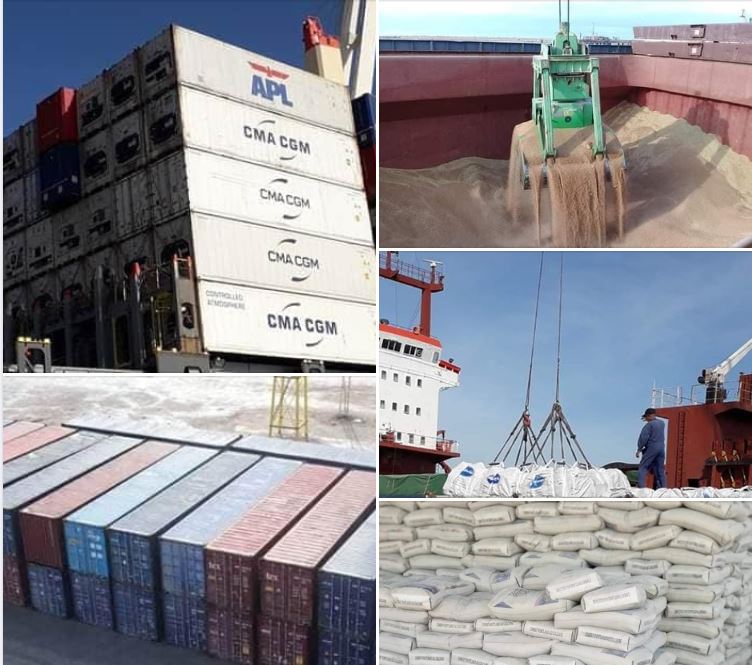
Goods not paid for using LCs will no longer be cleared at western Libyan ports after 31 December (Photo: Benghazi Port).

London, 18 November 2020:

Libya’s Customs Authority announced on Monday (16/11) that it will no longer release imported goods after the end of this year.

The authority said that by December 31 importers will no longer be able to clear their goods at seaports and land ports and any shipments that arrive after that date will be confiscated.

The procedure comes in implementation of the decision of the Faiez Serraj Libyan government based in Tripoli which had allowed traders to import goods without documentary credit (Letters of Credit-LCs) proving their access to official foreign currency from the Tripoli Central Bank of Tripoli (CBL).

RELATED POSTS

Former Director General of LAICO LAP Sudan sentenced to six years imprisonment for attempting to seize public funds using forged official documents

Spanish Embassy visa application centre opened in Benghazi – 8,000 visa applications processed via Tripoli in 2025

It will be recalled that the Tripoli-based Libyan government decree of August 2020 (560/2020) had stipulated that the period during which merchants can import goods without LCs will end on 31 December 2020.

It is unclear if the eastern Libyan government will implement this western Libyan government decree. If it is not implemented in the east, it may divert some imports to eastern ports to be transported by road to western Libya.

Analysis: Rationale and drawbacks

It will be recalled that the Tripoli-based Libyan government had passed the above decree to grant a waiver to merchants who had imported goods without having opening an official LC, that is without having purchased hard currency and paid for it through a Libyan bank.

The Tripoli government was forced into this decision, against the wishes of the Tripoli CBL, due to several factors.

These included the fact that Libya had just come out of the war on Tripoli with Khalifa Hafter. It was also thought that to destroy goods imported outside the official channel would obviously be a loss to importers, but also a waste of Libya’s fast dwindling hard currency resources.

These goods, which had remained in limbo stuck at ports for months, were also clogging storage space at Libya’s ports.

CBL restricted list of importable goods through LCs

The problem with the official LCs is that the CBL has taken it upon itself to draw up a list of what it sees as necessary goods and products for which LCs can be opened. The CBL sees this as part of its effort to preserve Libya’s diminishing hard currency reserves in view of the country’s economic crisis.

Libya’s budget has been operating on a budget for years made up through CBL loans. The deficit has been caused by Libya’s politically motivated oil closures and the crash in international crude oil prices.

An attempt to solve the cash crisis

The CBL also uses the implement of official LCs, by insisting a proportion of LCs is paid for in cash not by cheque or bank transfer, to force Libyan importers to get their cash hidden in their homes out into circulation. This they hope will help reduce the country’s cash crisis. As a result of the loss of confidence by the public in the Libyan authorities, Libyans have been hoarding their cash at home. This has left the banks dry.

Reduce the price of hard currency on the black-market

Nevertheless, the imposition of restrictions on what goods can be imported leaves a raft of goods that cannot be imported through LCs. This gap has been filled by the nimble private sector who buy hard currency on the black-market (or who have hard currency abroad) to meet demand for goods off the LC list.

Inflation, prices and cost of living

Hence allowing goods to be imported outside the LC system creates demand for hard currency on the black-market. This helps push up the price of hard currency which has a knock-on effect on inflation, prices, cost and standard of living.

Small business and grey economy

There are many small businesses operating in the grey economy who also prefer to import goods using cash. That way they avoid the taxman and the red tape and bureaucracy of opening LCs. There are also accusations of corruption by bank officials in facilitating the opening of LCs.

It is unclear if the Tripoli government will be able or willing to implement this new procedure to the letter. For example, Tunisian and Egyptian SME exporters and farmers engage in instant cross-border trade, especially for seasonal fruit and vegetables. These type of farmer exporters are used to the traditional cash-based transactions, reacting to the farming season and instant demand from Libya based on phone calls as prices in Libya become favourable.


Related Posts

Libya and Indonesia discuss cooperation in technical and vocational education, to link education with labour market and raise efficiency of national cadres
Business

Libya and Indonesia discuss cooperation in technical and vocational education, to link education with labour market and raise efficiency of national cadres

January 21, 2026
Libyan Export Promotion Centre changes to become Libyan Export Development Authority – new logo adopted
Business

Libyan Export Development Authority inaugurates the Unified Export Window at the Ras Ajdir border crossing with Tunisia

January 21, 2026
Libya Development and Reconstruction Fund signs contract with Turkey’s Ankamenia for maintenance of Benghazi University’s medical colleges
Business

France’s Veolia-Sidem starts rehabilitation work on Sousse’s steam desalination plant

January 21, 2026
Zawia airport construction starts – under the NDA and to be implemented by a Turkish company
Business

Zawia airport construction starts – under the NDA and to be implemented by a Turkish company

January 21, 2026
First scheduled flight lands at Kufra airport – good news for Libya’s wider aviation sector
Business

Kufra airport closes and commences maintenance work after suspicions raised over real drivers of closure decision

January 20, 2026
Libyan Industrial Union organizing conference on Libyan economy – invites participation
Business

Second Annual Forum of Libyan Industrial Union 2026 ‘‘We Meet to Debate’’ to be held on 27 January in Tripoli

January 20, 2026
Next Post

Jowfe to offer Halliburton services to Libyan operators

Zallaf and NOC discuss new South Refinery

libyaherald-Ads

Top Stories

  • The International Forum & Exhibition for Free Zones – Misrata: 28 to 29 June at Misrata Free Zone

    Qatari, Italian and Swiss US$ 2.7 billion investment in Misrata Free Zone to increase its capacity to 4 million containers annually

    0 shares
    Share 0 Tweet 0
  • CBL devalues LD by 14.7% from approximately LD 5.43/dollar to about LD 6.36/dollar

    0 shares
    Share 0 Tweet 0
  • Economy Minister Hwej warns that Libya can run out of hard currency reserves if it does not control imports

    0 shares
    Share 0 Tweet 0
  • ENI, in partnership with BP, NOC and LIA, commences drilling of deepwater exploration well in Gulf of Sirte

    0 shares
    Share 0 Tweet 0
  • Libya and Saudi Arabia discuss expanding partnership in oil, gas, and renewable energy

    0 shares
    Share 0 Tweet 0
ADVERTISEMENT
LibyaHerald

The Libya Herald first appeared on 17 February 2012 – the first anniversary of the Libyan Revolution. Since then, it has become a favourite go-to source on news about Libya, for many in Libya and around the world, regularly attracting millions of hits.

Recent News

Former Director General of LAICO LAP Sudan sentenced to six years imprisonment for attempting to seize public funds using forged official documents

Spanish Embassy visa application centre opened in Benghazi – 8,000 visa applications processed via Tripoli in 2025

Sitemap

  • Why subscribe?
  • Terms & Conditions
  • FAQs
  • Copyright & Intellectual Property Rights
  • Subscribe now

Newsletters

    Be the first to know latest important news & events directly to your inbox.

    Sending ...

    By signing up, I agree to our TOS and Privacy Policy.

    © 2022 LibyaHerald - Powered by Sparx Solutions.

    Welcome Back!

    Login to your account below

    Forgotten Password? Sign Up

    Create New Account!

    Fill the forms below to register

    *By registering into our website, you agree to the Terms & Conditions and Privacy Policy.
    All fields are required. Log In

    Retrieve your password

    Please enter your username or email address to reset your password.

    Log In
    No Result
    View All Result
    • Login
    • Sign Up
    • Libya
    • Business
    • Advertising
    • About us
    • BusinessEye Magazine
    • Letters
    • Features
    • Why subscribe?
    • FAQs
    • Contact

    © 2022 LibyaHerald - Powered by Sparx Solutions.

    This website uses cookies. By continuing to use this website you are giving consent to cookies being used. Visit our Privacy and Cookie Policy.