By Sami Zaptia.
. . .[restrict] 
Tripoli, 27 May 2014:
UNSMIL organized a workshop today held at the Corinthia hotel on the role of the media in supporting an inclusive constitution that supports the rights of sectors of Libya including minorities, women and men.
Opening the event, Lamia Busedra, Deputy Minister of Information, put the constitutional drafting process into a historical context when she said that Libya’s current generation was charged with drafting a constitution for future generations. A constitution that she hoped could unite Libya and Libyans.
She stressed that this was not an easy task and role that the drafting committee and the general public are tasked with – a task that would need everyone’s energies, she explained.
Busedra said that she insisted on being part of the workshop and the process because it was the time for persistence in this constitutional drafting process.
On the specific role of the media, the Deputy Minister hoped that they can play their positive and vital role by delivering and disseminating information and activating citizens in a positive direction.
Speaking earlier to Libya Herald specifically on women’s participation in the constitutional drafting process, Busedra said that women need to understand how politics affects everyday life at the micro-level in order to encourage their participation. Women were much more concerned at the detailed micro level, she explained. She also supports a stipulation that no gender can hold more than 80% of the seats in an elected body.
Amina Al-Hafi, a participating journalist from Febrayer magazine told this paper that she knew a lot about the constitutional drafting process before attending the workshop today. But now, more than ever, she had come to realize the importance of including provisions for women’s rights within the constitution.
She said she feels the importance of educating women about this issue and wishes she could speak with every woman in the country personally. She will write about this in the magazine for which she works, she explained.
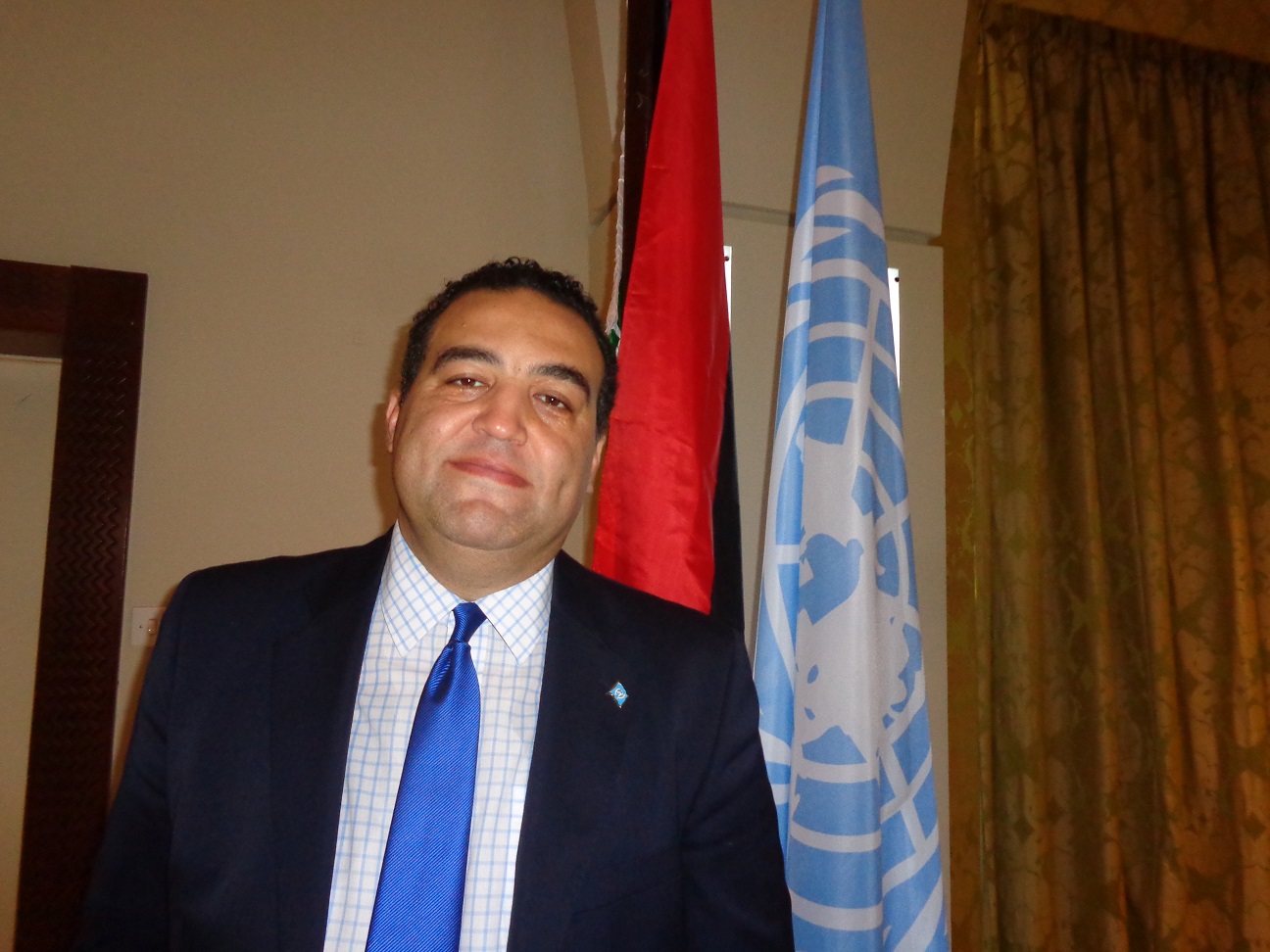
The main presenter of the workshop, Mohamed Elghannam, UNSMIL’s constitutional consultant who has been in Libya for a year and is available for consultancy to Libya’s Constitutional Drafting Authority (CDA), said that the role of the media is one of the most important roles in the constitutional drafting process.
In a detailed and informative review of constitutional drafting experiments and experiences in Egypt, Tunisia, Iraq, Kenya and South Africa, Elghunnam stressed that a constitution is not enough for a democracy to succeed. He pointed out that most dictatorships had a constitution and often used a constitution as a shield for their dictatorships.
Elghannam said that democracy needed a host of other factors such as safety, security, and the equal application of the rule of law and the constitution on all citizens – including the rulers of the country. In other words, it is the implementation of the constitution that is more important than the drafting of the document, he explained.
The paramount factor in ensuring the good drafting and implementation of a constitution, explained the UNSMIL’s constitutional consultant, is the proper participation of the citizens, including NGOs, media, minorities and the various lobby groups. It is the people who are the guarantors and protectors of the constitution, he explained.
A constitution should be comprehensive, inclusive and transparent in its drafting and implementation. It should not be written exclusively by elites, lawyers or political parties, and it should not be drafted under the threat of coercion.
The general public across all its strata, including minorities and women, should have access to the CDA. Constitutions should not be drafted secretly in closed-off rooms, and if they are, history shows that they invariably fail.
The 1951 Libyan constitution and its amendment of 1963 was a good constitution for its time, but it did not take into account many factors in Libyan society that exist in 2014, UNSMIL’s constitutional consultant explained. It mention women briefly once and ethnic minorities were not specifically protected, for example, and its 1963 version espoused a centralized system of government, rather than a decentralized one.
Elghannam said that for the CDA to function efficiently it needs administrative support in the form of a secretariat. It should have a specifically defined role and time period, otherwise it becomes self-fulfilling.
He explained that a constitution is a set of principles – a political and not a legal document which need laws enacted by a parliament to enforce it. Historically, a constitution in the Arab world usually consists of 150-250 articles, he explained referring to previous experiments and experiences.
According to the UNSMIL constitutional consultant’s interpretation of Libya’s 2011 Transitional Constitutional Declaration and on the basis that the CDA held its first historic meeting on 21 April 2014 in the eastern city of Beida, the approximate schedule for Libya’s CDA and the resultant referenda and parliamentary elections is as follows:
| 21 April 2014 | First meeting of the CDA – after 120 days it must present a draft to legislature to vote on – that is, by 20 August 2014 |
| 20 August 2014 | Legislature must vote on the draft constitution – if passed present to public to vote on in a referendum within 30 days. |
| 20 September 2014 | Present to Libyan public draft constitution to vote on in a referendum by a two-thirds majority of those who voted. |
| 20 October 2014 | If the public rejects the constitution it must be returned to the CDA for amendment within 30 days and represent. |
| ? | If the public rejects the draft constitution a second time, there is no contingency for this in the 2011 TCD! |
| 20 October 2014 | If the draft constitution is approved by public referendum, an election law must be prepared within 30 days |
| 20 February 2015 | Elections must be held after 120 days from 20 October 2013 |
| 20 March 2015 | Libya’s fully constitutional and empowered parliament to meet by 20 March 2015 |
Elghannam explained that a low turnout at the constitutional referendum does not negate the constitution – pointing out that while 98 percent of Egyptians voted yes for their constitution, there was only a 38 percent turnout.
Ultimately, UNSMIL’s constitutional consultant said that the media had one of the most important roles to play in the whole process by providing oversight, monitoring, the dissemination of information, simplification of ideas and principles for easier presentation to the general public, constructive criticism, investigation, education, and updates on changes and progress.
The constitution is guaranteed and protected by the full participation of all the sectors of the public during its drafting process and during its enforcement by laws enacted by parliament, he stressed again. [/restrict]